

The strange psychology of time anxiety—and why parenthood makes it worse
Parenthood comes with enormous pressure to savor every moment—but worrying about it can pull us out of the present.


A few weeks ago, I found myself in a uniquely unhinged state that most parents will probably understand. I stood over the kitchen sink—shoveling a sandwich in my mouth with one hand, wiping down the counter with the other, moving with the frantic energy of a diner waitress—and present in neither activity. (Mentally, I was adding items to my grocery list and calculating whether I could still shower before picking up my son from daycare.)
It’s a snapshot, but it’s a fairly good representation of how I’ve been living since having a baby. Constantly hurried. Constantly multitasking. Constantly feeling like I’m running out of time.
During one of these recent episodes, my husband innocently asked me, “What’s the rush?”
I was dumbfounded.
I didn’t have anywhere to be. Whatever I was doing wasn’t especially important. Nothing bad would happen if it took five minutes longer.
So why did I feel so frantic?
A few years ago, while ghostwriting for a mental health company, I learned there was a term for this feeling: time anxiety. Having a name for it was surprisingly reassuring. It meant I wasn’t the only person who lived with a persistent sense of urgency, who watched the clock even when there was no deadline, or who struggled to enjoy free time because I was too busy evaluating whether I was using it the “best” way I could.
I recognized pieces of myself in that description long before I became a mother. Then, just a few months before my son was born, Maren Morris released a song called “Dreamsicle” that captured the feeling even more perfectly.
I cry that things are over while the party’s still going
I press petals between pages when the flowers were still growing
I overthink the moment right down to the minute
Will I ever enjoy anything while I’m standing in it?
The first time I heard that verse—crawling through a coffee shop drive-through during a torrential rainstorm—it landed hard. That’s probably because it captured something I hadn’t been able to articulate yet: The idea that the fear of missing the moment becomes the very thing that pulls us out of it.
In hindsight, I realized that the whispers of time anxiety had begun in my early 30s, when I felt increasing pressure to keep up professionally and became acutely aware of my reproductive clock. But after I became a mother, those whispers became deafening.
“The days are long, but the years are short.” I can’t count on two hands how many times someone said this to me when I was nearing my due date or newly postpartum. The expression, popularized by Gretchen Rubin in The Happiness Project, captures one of parenthood’s strangest contradictions.
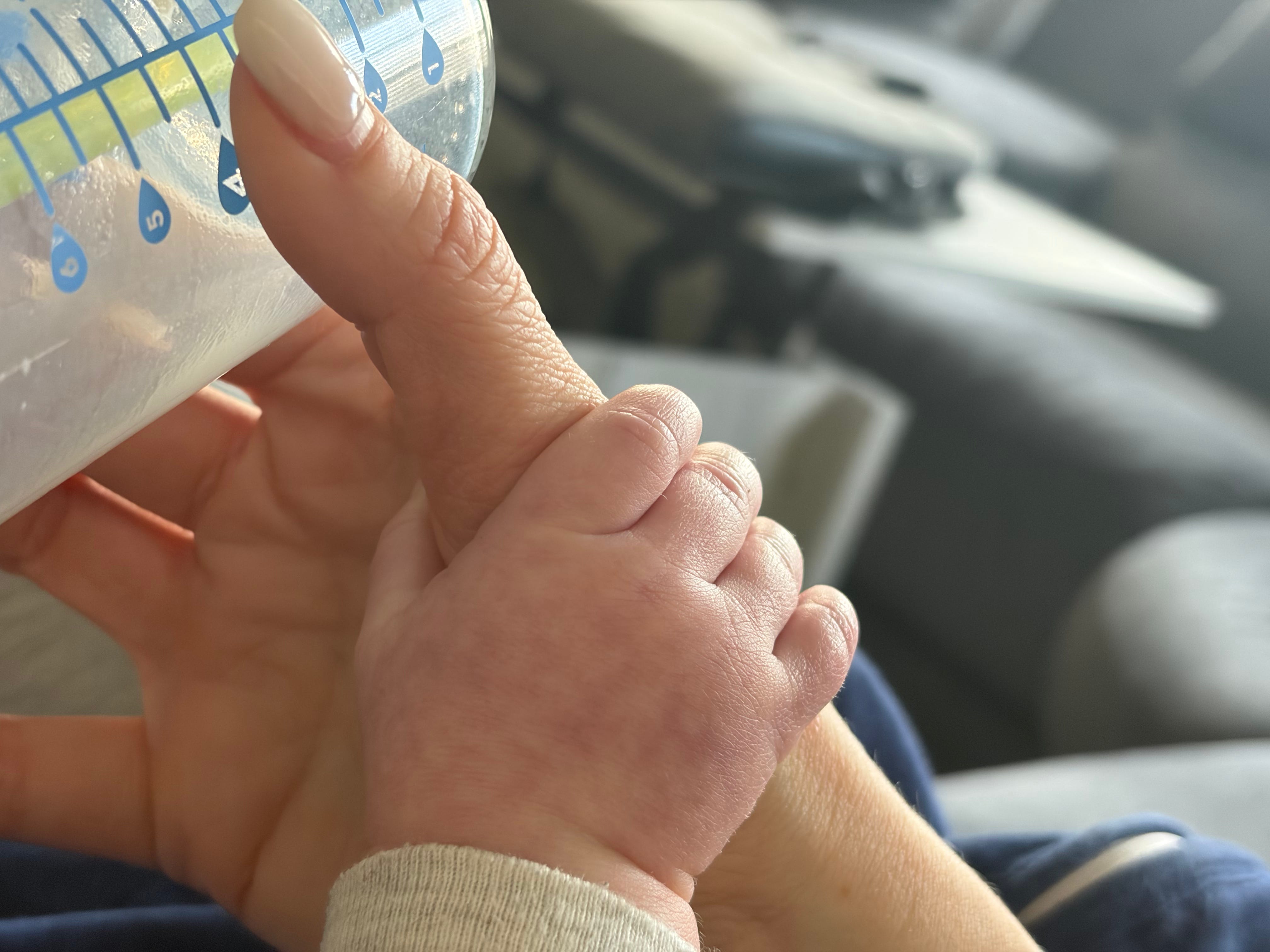
Caring for a baby entails a lot of repetition—particularly in the earlier stages: diaper changing, bottle washing, bathing, swaddling, and rocking to sleep—only to begin the cycle all over again. That repetitive labor can make a day feel endless. But according to Jesse Ofori, a perinatal clinical psychologist and founder of Motherhood in Mind, our brains don’t replay every bottle feed and bedtime routine when we look back on that time in our lives. They tend to compress those repetitive experiences into a much shorter summary, making it feel like the chapter zoomed by in the blink of an eye.
Time anxiety isn’t a clinical diagnosis, says Amy Vigliotti, a licensed psychologist and founder of SelfWorks, though its most extreme form is sometimes called chronophobia: a fear of time passing.
One key driver is the fact that while the physical measurement of time may be objective, our experience of it is anything but.
“It’s influenced by all kinds of things—like our emotions, attention, memory, and relationships,” Vigliotti explains.
Parenthood taps into all of them, says Vigliotti. It radically reorganizes our schedules, relationships, identities, careers, and attention. We hyper-fixate on schedules, worry about future milestones. Should I wake the baby from his nap now so he’s not wired at bedtime? Am I giving him enough tummy time? Oh no, I just got distracted by my phone, did I miss something important? It’s like having an internal time accountant who never punches out, and never takes vacations.
Not to mention, parenthood also makes the passage of time unusually visible. Particularly during the first few years, children seem to transform overnight. They learn new words, acquire new expressions and gestures, outgrow clothes, drop naps, and suddenly stop those endearing mispronunciations you didn’t even realize you’d miss until they were gone.
That constant progression can contribute to the feeling that time is flying, says Vigliotti.
Anxiety may also distort the way we experience time. In research experiments, anxious people sometimes underestimate how much time has passed, as though the minutes are slipping by faster than they really are. Yet when people look back on stressful or anxious periods, those same stretches can feel longer and more densely packed in memory.
That contradiction feels familiar to me. A challenging afternoon with a fussy baby can feel interminable. Then, somehow, a month vanishes.
Researchers are still untangling exactly why this happens, and laboratory studies involving brief intervals can’t fully explain why a year of our lives feels fast or slow. But attention appears to matter. When our minds are divided between the present moment and whatever we are anticipating, monitoring, or worrying about, we may register less of what is actually happening.
In other words, worrying that time is passing may make it harder to inhabit the time we still have.
Anxiety isn’t the whole story, either. Pleasurable and absorbing experiences often seem to pass quickly, too. Time flies when we are having fun, as the cliché goes—and there’s legitimate research to support this.
According to Ofori, parenthood also cranks our brain’s protective system “up to full volume.” From the perspective of Compassion Focused Therapy (CFT), our brains evolved to prioritize our survival—which is why they’re almost hard-wired to notice change and predict potential loss. Basically, we become acutely aware of the rapid changes happening right before our eyes because we’re trying to protect what matters most.
“The feeling that time is speeding up is often a reflection of how deeply attached we are,” Ofori explains. “The more something matters to us, the more aware we become that it won’t stay as it is forever.”
My own relationship with time was complicated long before I became a parent. When I was 12, my mother was hit by a car. She’s fortunate to have lived, but spent the next year of my life in the hospital, and left permanently disabled. The accident catapulted me into an existential awareness I wasn’t developmentally prepared to carry: Our time on earth is limited, and it can end without warning.
I suspect that understanding has probably fueled some of my ambition and productivity. It may also explain why I can lie awake at night cataloguing everything I need to accomplish the next day in order to feel like a person worthy of taking up space. So, motherhood didn’t necessarily create my fear around time—it simply unlocked more opportunities for it to fester.
This is partly because motherhood made me acutely aware of just how finite time is as a resource. I have less discretionary time than ever, and I often struggle to decide how to use what I do have. When he goes down for the nap, I debate how to spend the next hour. Should I hop on the treadmill? Take a shower? Respond to texts? Lie down?
By the time I decide, he’s woken up.
So I try to maximize every available minute. I multitask compulsively. I watch the clock. I agonize over whether I’m being productive enough, then realize that my attempts to squeeze more out of my time have prevented me from giving anything my full attention. The more desperately I try to hold onto time, the faster it slips away from me.
The anxiety follows me into my career, too. Before having a baby, I was laser-focused on professional growth. I had the energy to stay up late crafting pitches, writing cover letters, updating my resume, and firing off LinkedIn connections. Now, some nights, I barely have the energy to wash my face. So, naturally, my professional momentum has slowed. I know this is a season and that there will eventually be another one during which I can redirect more attention toward my career. Still, sometimes I can’t shake the feeling that the media landscape is shifting without me—that everyone else is building, publishing, networking, and moving forward while I am standing still.
Social media is an accelerant. Though we may be inching away from the most nauseating version of hustle culture, it’s still remarkably easy to scroll through a feed filled with peers publishing books, starting companies, taking epic vacations, buying bigger houses, and having more kids. Within minutes, you can feel simultaneously behind in your career, family life, finances, friendships, fitness, and personal development.
Time anxiety offers up endless evidence that you are late. There are several ways it can manifest. Compression anxiety is rooted in the present: watching the clock, rushing from task to task, and trying to squeeze more into a limited window. Anticipatory anxiety is focused on the future: grieving a stage before its even ended. Existential time anxiety is the suffocating awareness that life itself is finite.
Parenthood has activated all three in me.
Sometimes I’m anxious because I don’t have enough time to complete everything I want to do today. Sometimes it’s because my son will never again be exactly the age he is right now. And sometimes it’s because loving another person this intensely has made the stakes of being alive feel almost unbearable. But all of those fears bring me to another question: What am I actually afraid of losing?
“A dad I worked with told me over and over again that he wished he could have frozen time when his daughter was little,” says Rod Mitchell, a registered psychologist and founder of Emotions Therapy Calgary. “What he was actually grieving, though, was the version of himself who felt that essential to someone—not the child growing up, but the self that only existed when they were small.”
It is one of the most common sentiments Mitchell hears from parents, and it resonates deeply.
My son is changing, but so am I. Every stage of his life comes with a particular version of our relationship—and a particular version of me. When the stage ends, that version disappears too. Maybe that’s why milestones feel so bittersweet: every hello is also a goodbye.
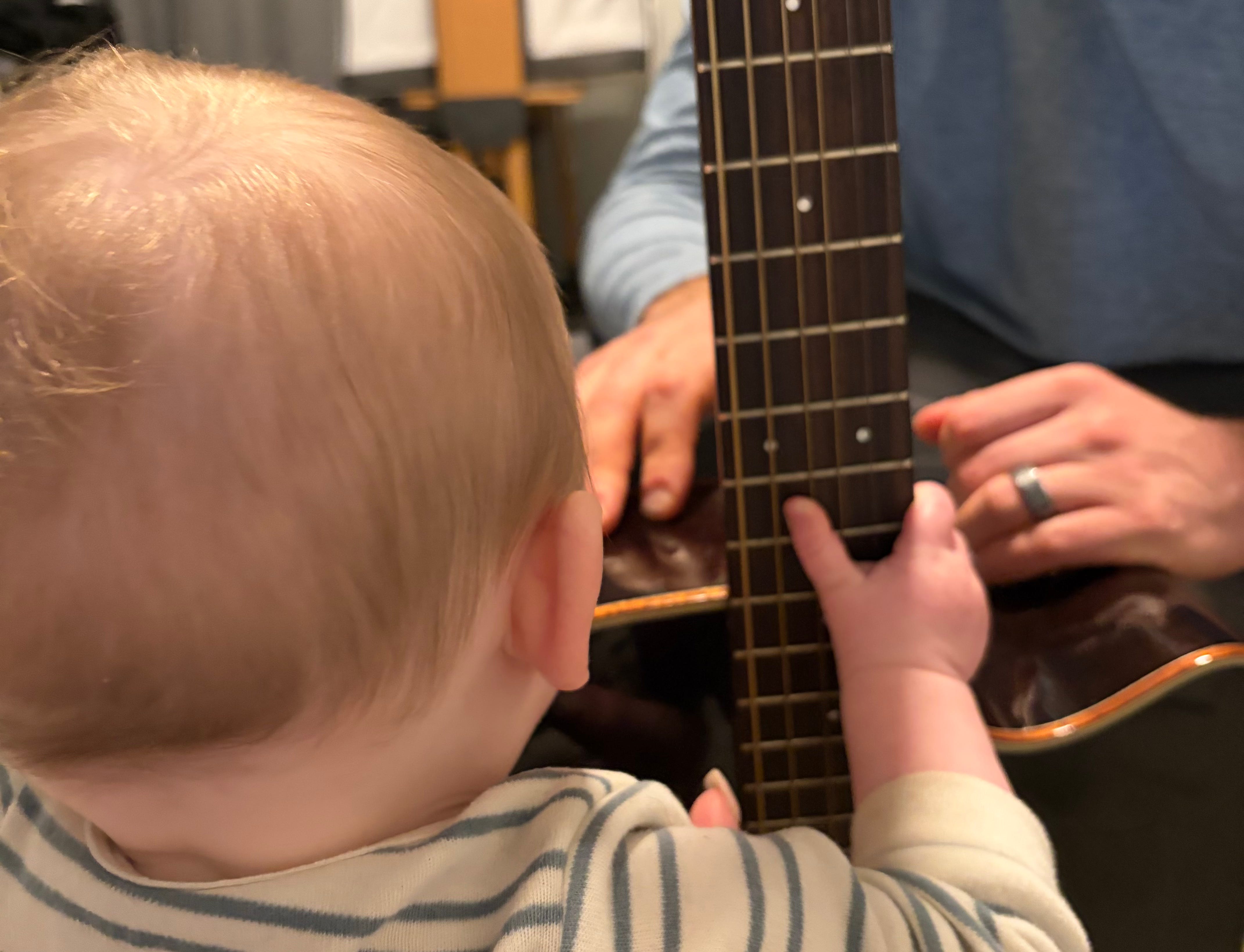
The command to “soak it all in” sounds beautiful in theory, but often becomes its own form of pressure. Parents are left constantly wondering: Am I appreciating this enough? Am I taking enough pictures? Is this the last time he’ll fall asleep on my shoulder? Should I be documenting everything in a journal?
Mitchell and Ofori caution against turning presence into another impossible standard, or something to perfect.
“The reframe I give my clients is that being present isn’t something you can fail at,” Mitchell says. “Not every moment is worth cherishing, and the social media push to savor everything is exactly what will pull you away from those moments that truly matter.”
When I brought my complicated relationship with time to my therapist, she gave me an assignment that felt almost insultingly simple: practice mindfulness. I left the session annoyed, mainly because this was precisely what my husband had already advised, and I hate when he’s right.
“Go on a walk with no earbuds,” she said. “Eat dinner without the TV on.”
My mind is almost programmed to skip a few steps ahead: anticipating, strategizing, projecting, organizing, calculating. Mindfulness asks me to stop treating every moment as merely a bridge to the next one. Grounding myself in the present has never felt easy or intuitive for me—but my son gave me a reason to practice.
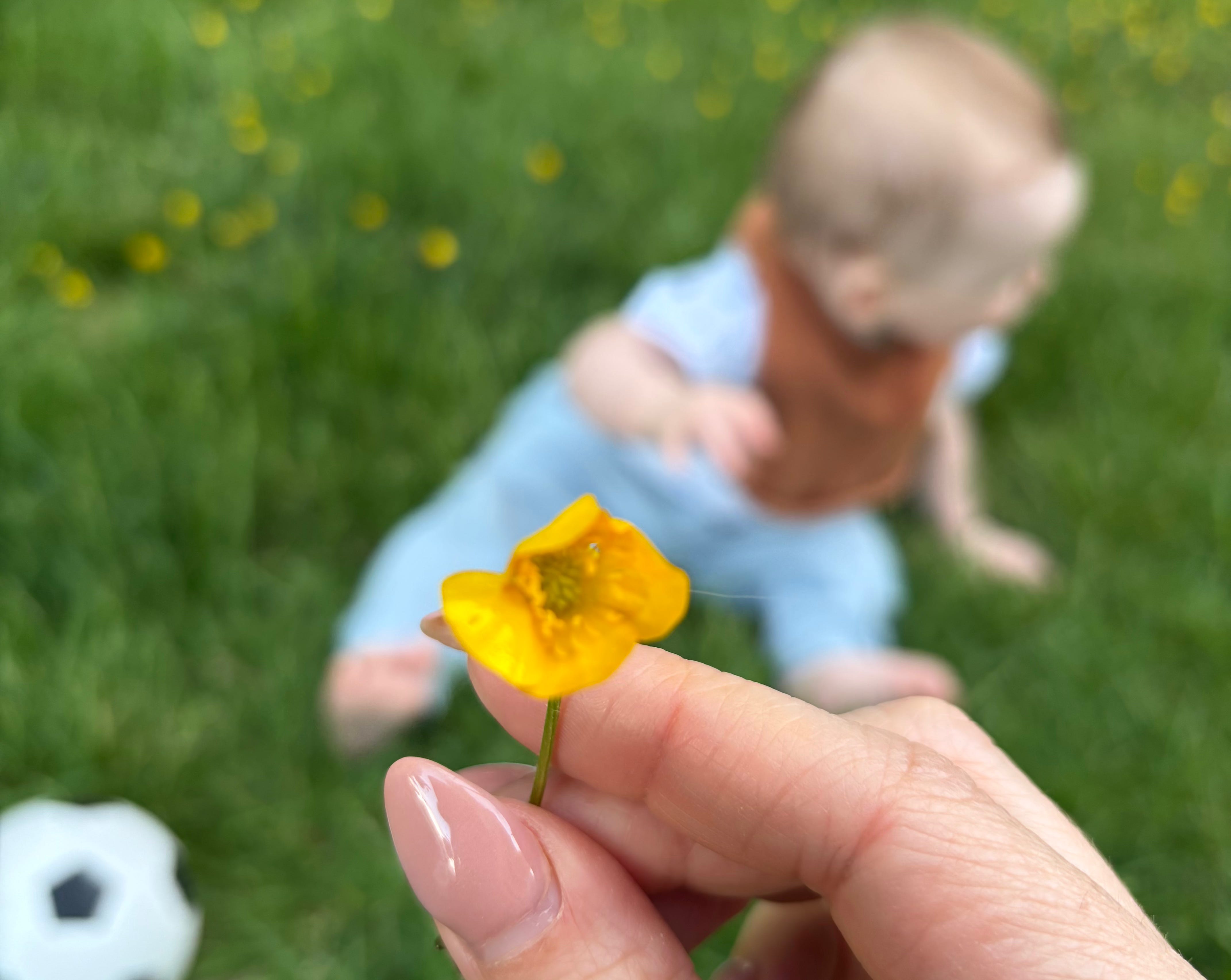
Sitting with him on the floor, I sometimes notice the way his hair turns from brown to blond to strawberry as sunlight filters through the window. I marvel at how soft his thigh feels beneath my hand, or how he has learned to grasp a toy between his thumb and pointer finger. Out in our yard, he spots a white clover in the grass, plucks it, and begins gently twirling the pom-pom head around and around with the fascination of a tiny botanical documentarian. He is completely immersed in what he’s doing—and for once, so am I. In those moments, I’m not optimizing, or wondering whether I should be doing something more useful.
I’m just there.
I’m not trying to erase my time anxiety. I’m not even sure that would be possible—and even if it were, I’ve always believed anxiety is trying, however clumsily, to tell us something.
In my case, the awareness that time passes is a gift. It reminds me that my life matters to me. The anxiety around it tells me my mind is trying—perhaps a little too intensely—to protect something precious.
Studies have found that experiencing awe can expand our subjective sense of time, so I’ve started seeking out more experiences that evoke it: getting outside, looking up at a sky that makes me feel small, living vicariously through my son when he discovers something ordinary for the first time.
And when I notice myself needlessly speed-walking through the house, I return to my husband’s question.
What’s the rush?
So what if I don’t fold all the laundry? So what if I answer the email tomorrow instead of today? So what if I run out of time to exercise because I got caught up playing with my son in the grass?
Once a week, I try to have a schedule-free day with him. We still take naps and run errands, but I resist the urge to engineer the day for maximum efficiency. I let time unfold without trying to wrestle it into submission.
I still feel a pang when he outgrows another pair of footie pajamas. I still think ahead to all the versions of him—and of me—that are coming and going, and that I will never experience again.
The cruel irony of time anxiety is that all the worrying, clock-watching, and multitasking is actually the ultimate thief of time.
Being present doesn’t stop time, and it doesn’t cure my anxiety about losing it. But it softens the sharp edges.
Maybe that’s enough. Maybe the point isn’t to freeze time, stretch it, or use every minute perfectly—but just to be here while it’s still mine.
Have you experienced time anxiety? I’d genuinely love to hear from you in the comments—or just hit reply if you’re reading this by email.